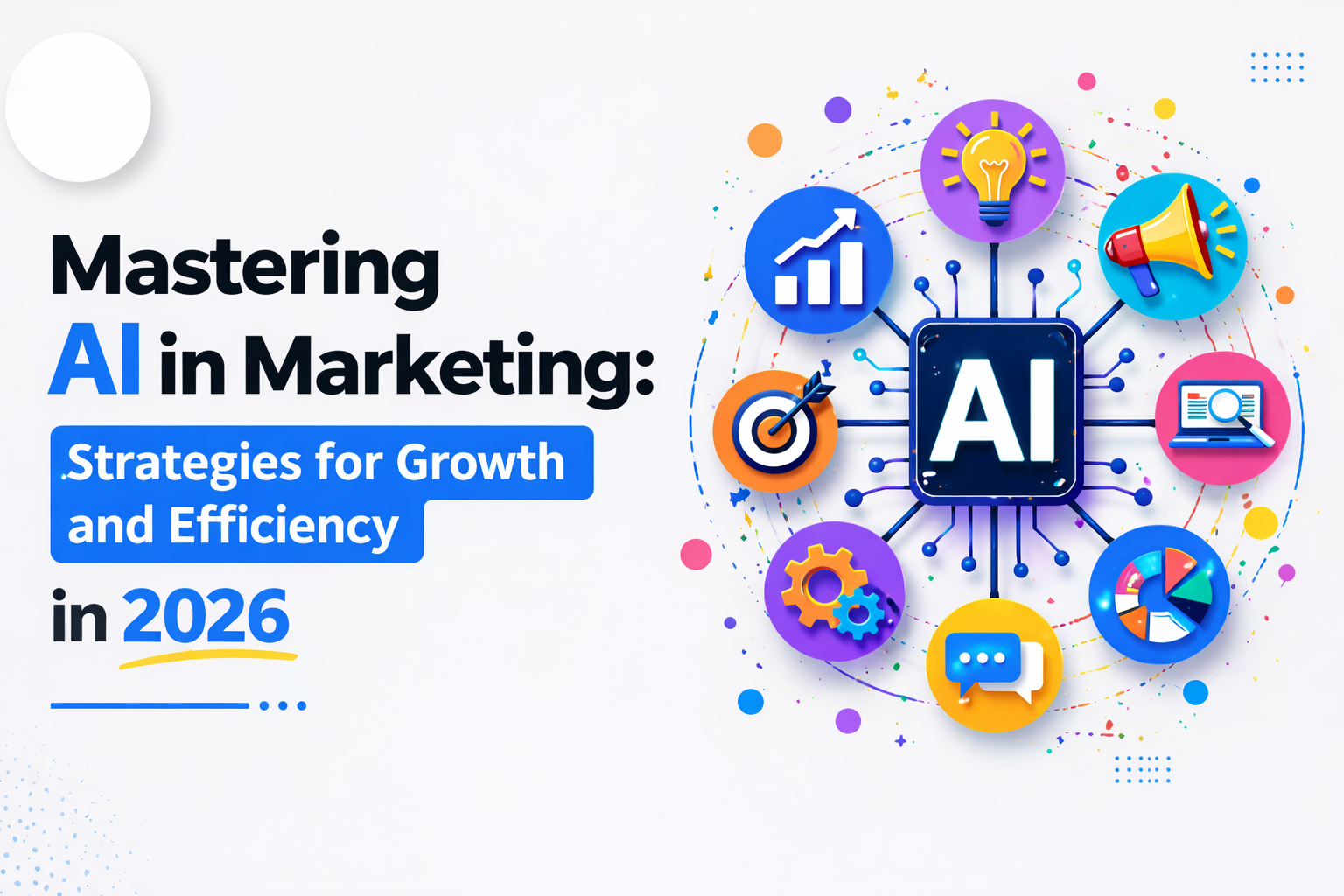
The landscape of digital marketing is in constant flux, driven by technological advancements and evolving consumer expectations. Among the most transformative forces shaping this evolution is Artificial Intelligence (AI). Businesses and marketers are no longer asking *if* they should adopt AI, but rather *how* they can best integrate it to achieve sustainable growth and operational efficiency. From personalizing customer journeys at scale to automating complex tasks and unlocking deeper insights from vast datasets, AI is proving to be an indispensable ally for those aiming to thrive in the competitive digital arena. This comprehensive guide explores the multifaceted applications of AI in marketing, offering actionable strategies, practical tips, and a glimpse into the future trends that will define success.
The Transformative Power of AI in Modern Marketing
Artificial Intelligence is more than just a buzzword; it’s a fundamental shift in how marketing operates. It empowers marketers to move beyond intuition and guesswork, enabling them to make data-backed decisions with unprecedented speed and accuracy. AI’s ability to process and analyze massive amounts of data allows for a deeper understanding of customer behavior, preferences, and trends, leading to more effective and personalized marketing campaigns. This technological revolution is democratizing advanced marketing capabilities, making sophisticated strategies accessible to businesses of all sizes.
Understanding the Core AI Marketing Concepts
At its heart, AI in marketing leverages machine learning (ML) algorithms, natural language processing (NLP), and other AI technologies to automate processes, gain insights, and enhance customer experiences. The goal is to create more intelligent, efficient, and effective marketing efforts.
Machine Learning (ML) in Marketing
ML algorithms are the engines driving many AI marketing applications. They learn from data without being explicitly programmed, identifying patterns and making predictions. In marketing, this translates to predicting customer churn, identifying high-value leads, segmenting audiences with remarkable precision, and optimizing ad spend in real-time.
Natural Language Processing (NLP) in Marketing
NLP allows machines to understand, interpret, and generate human language. This is crucial for tasks like analyzing customer reviews and social media sentiment, powering chatbots for instant customer support, and generating marketing copy that resonates with specific audiences.
Generative AI and Content Creation
A rapidly evolving area, generative AI can create novel content, including text, images, and even video. This has profound implications for content marketing, enabling faster ideation, drafting, and personalization of marketing materials.
Key AI-Driven Strategies for Business Growth
Integrating AI into your marketing strategy can unlock significant growth potential. The key lies in identifying the right applications and implementing them effectively. Here are some of the most impactful strategies:
1. Hyper-Personalization at Scale
Customers today expect personalized experiences. AI allows marketers to deliver this at an individual level, analyzing vast amounts of data to understand each customer’s unique journey, preferences, and intent. This enables tailored product recommendations, personalized email content, dynamic website experiences, and targeted advertising.
How AI Enables Hyper-Personalization
- Data Analysis: AI can process behavioral data, purchase history, demographic information, and real-time interactions to build detailed customer profiles.
- Predictive Modeling: It predicts what a customer is likely to need or want next, allowing for proactive engagement.
- Dynamic Content Optimization: AI can adjust website content, email subject lines, and ad creatives on the fly to match individual user profiles.
2. Enhanced Customer Service with AI Chatbots and Virtual Assistants
Customer service is a critical touchpoint. AI-powered chatbots and virtual assistants can provide instant, 24/7 support, answering frequently asked questions, guiding users through processes, and even handling basic transactions. This frees up human agents to focus on more complex and high-value customer interactions.
Benefits of AI in Customer Service
- Instant Response Times: Resolves customer queries immediately, improving satisfaction.
- Scalability: Handles a large volume of inquiries simultaneously without increased staffing.
- Consistent Information: Provides accurate and standardized responses.
- Data Collection: Gathers valuable insights from customer interactions to improve services.
3. Intelligent Marketing Automation and Workflow Optimization
Marketing automation has been around for a while, but AI takes it to a new level. AI can optimize automated workflows by making intelligent decisions about when and how to send communications, which channels to use, and what content to deliver based on real-time user behavior and predicted engagement levels.
AI-Powered Automation Scenarios
- Lead Nurturing: AI can score leads and trigger personalized nurturing sequences based on engagement, ensuring the right message reaches the right prospect at the right time.
- Campaign Optimization: AI can dynamically adjust ad bids, allocate budgets across channels, and pause underperforming campaigns for maximum ROI.
- Email Marketing: AI can optimize send times, subject lines, and content for individual recipients, boosting open and click-through rates.
4. Advanced Data Analytics and Predictive Insights
The volume of marketing data is overwhelming. AI excels at sifting through this data to uncover hidden patterns, predict future trends, and provide actionable insights that inform strategic decisions. This includes understanding campaign performance, forecasting sales, identifying market opportunities, and predicting customer lifetime value.
Key Analytical Capabilities of AI
- Customer Segmentation: AI can identify micro-segments within your audience based on complex behavioral patterns, far beyond traditional demographic segmentation.
- Attribution Modeling: AI can provide more sophisticated multi-touch attribution models, understanding the true impact of each marketing touchpoint on conversions.
- Sentiment Analysis: AI can gauge customer sentiment from reviews, social media, and surveys, providing early warnings or indicators of brand perception.
5. AI-Assisted Content Creation and Optimization
Generative AI tools are revolutionizing content creation. Marketers can use AI to brainstorm ideas, draft blog posts, write social media updates, generate ad copy variations, and even create initial versions of visual assets. While human oversight remains crucial for quality and brand voice, AI significantly speeds up the content pipeline.
Practical Applications of Generative AI in Content
- Drafting Blog Posts and Articles: AI can generate outlines and initial drafts, saving significant writing time.
- Creating Social Media Copy: Generate multiple variations of social media posts tailored to different platforms and audience segments.
- Developing Ad Creatives: AI can assist in generating ad headlines, descriptions, and even image concepts.
- Personalizing Email Content: AI can tailor email body content to individual recipient preferences and past interactions.
Practical Tips for Implementing AI in Your Marketing Strategy
Adopting AI might seem daunting, but a strategic approach can ensure successful integration. Start small, focus on clear objectives, and continuously learn and adapt.
1. Define Clear Goals and Objectives
Before diving into AI tools, clearly articulate what you aim to achieve. Are you looking to increase lead generation, improve customer retention, reduce operational costs, or enhance campaign performance? Well-defined goals will guide your AI tool selection and implementation.
2. Start with a Pilot Project
Instead of a full-scale overhaul, begin with a pilot project focused on a specific marketing area. This could be implementing an AI chatbot for customer support or using AI for personalized email subject lines. This allows you to test, learn, and refine your approach with minimal risk.
3. Choose the Right Tools and Technologies
The market is flooded with AI marketing tools. Research and select tools that align with your goals, budget, and technical capabilities. Consider factors like ease of integration, scalability, and vendor support. Many platforms now offer AI-powered features out-of-the-box.
4. Ensure Data Quality and Governance
AI models are only as good as the data they are trained on. Invest in data hygiene, ensure data accuracy, and establish strong data governance practices. This includes adhering to privacy regulations like GDPR and CCPA.
5. Foster a Culture of AI Literacy
Educate your marketing team about AI. Provide training on how to use AI tools effectively and how AI is shaping the future of marketing. Encourage experimentation and continuous learning. Empower your team to collaborate with AI, not be replaced by it.
6. Measure, Analyze, and Iterate
Continuously monitor the performance of your AI initiatives. Track key metrics, analyze the results, and use the insights to iterate and improve your strategies. AI implementation is an ongoing process, not a one-time setup.
Industry Examples of AI in Action
Leading companies are already demonstrating the power of AI in marketing across various sectors.
- E-commerce Giants: Companies like Amazon and Netflix use AI extensively for personalized product and content recommendations, driving significant engagement and sales. Their algorithms learn from user viewing and purchasing history to suggest items with high relevance.
- SaaS Providers: Many software-as-a-service (SaaS) companies leverage AI for intelligent lead scoring, identifying the most promising prospects for their sales teams and automating outreach based on user engagement with their platform.
- Financial Services: Banks and financial institutions use AI-powered chatbots for customer service, offering instant support and guidance on banking services. They also employ AI for fraud detection and personalized financial advice.
- Content Platforms: Media companies and publishers utilize AI to analyze reader engagement, personalize content delivery, and optimize headlines and article recommendations to increase time spent on site and subscription rates.
The Future of AI in Marketing
The trajectory of AI in marketing points towards even greater sophistication and integration. We can anticipate several key developments:
- Hyper-Intelligent Agents: AI agents will become more autonomous, capable of managing entire marketing campaigns with minimal human intervention, making strategic decisions based on real-time market data.
- Predictive Customer Journey Mapping: AI will predict customer needs and potential pain points long before they arise, allowing for proactive and highly relevant interventions.
- Enhanced Creative AI: Generative AI will evolve to produce increasingly sophisticated and emotionally resonant creative assets, blurring the lines between human and machine-generated content.
- Ethical AI and Transparency: As AI becomes more pervasive, there will be an increased focus on ethical AI practices, ensuring fairness, transparency, and responsible data usage in all marketing applications.
- AI-Powered Brand Building: AI will play a more significant role in shaping brand narratives, understanding cultural nuances, and communicating brand values in a way that deeply resonates with target audiences globally.
Frequently Asked Questions (FAQs)
What is the primary benefit of using AI in marketing?
The primary benefit of using AI in marketing is the ability to achieve greater personalization, efficiency, and data-driven decision-making. This leads to improved customer experiences, higher conversion rates, and optimized marketing ROI.
Can AI replace human marketers?
AI is more likely to augment human marketers than replace them. AI excels at data analysis, automation, and repetitive tasks, freeing up marketers to focus on strategic thinking, creativity, emotional intelligence, and building meaningful customer relationships.
What are the key considerations for implementing AI in a small business?
For small businesses, key considerations include starting with clear, achievable goals, choosing user-friendly and affordable AI tools, focusing on a specific area (like customer service chatbots or email personalization), ensuring data privacy compliance, and investing in basic team training on AI tools.
How can AI improve customer personalization?
AI improves personalization by analyzing vast amounts of customer data (behavioral, transactional, demographic) to create detailed profiles, predict individual preferences, and deliver tailored content, product recommendations, and offers across various touchpoints in real-time.
What is the role of generative AI in content marketing?
Generative AI assists content marketing by speeding up content ideation, drafting initial versions of blog posts, social media updates, ad copy, and even visual assets. It helps overcome writer’s block, creates content variations, and enables more efficient content production at scale.
How do I measure the success of my AI marketing initiatives?
Success is measured by tracking key performance indicators (KPIs) relevant to your initial goals. This could include metrics like customer engagement rates, conversion rates, customer lifetime value, cost per acquisition, customer satisfaction scores, and the efficiency gains in marketing operations.
In conclusion, AI is no longer a futuristic concept but a present-day imperative for marketers seeking to stay competitive. By strategically integrating AI into their operations, businesses can unlock unprecedented levels of personalization, efficiency, and growth. The journey of AI in marketing is one of continuous evolution, promising even more intelligent and impactful strategies in the years to come.