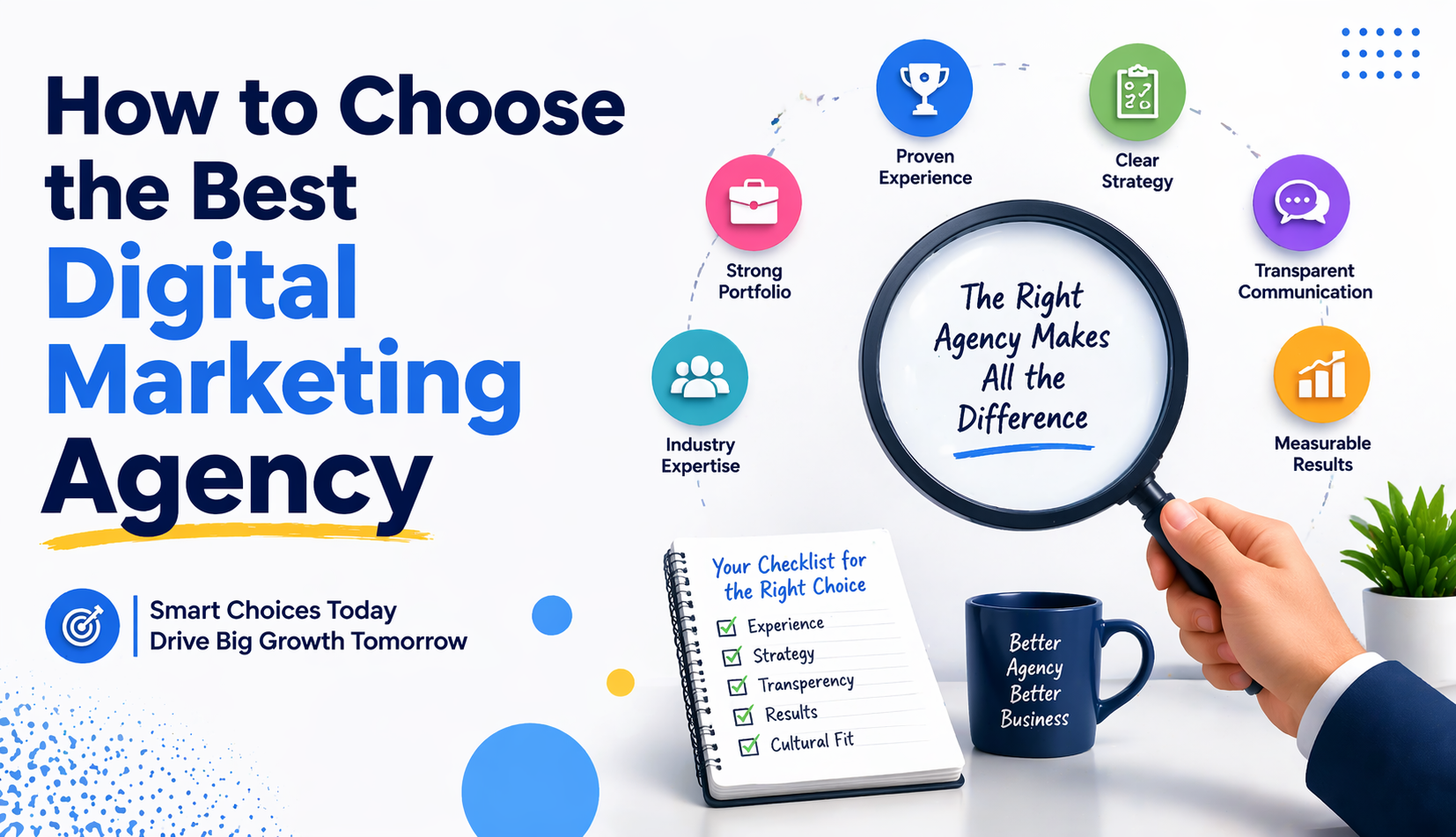
In today’s rapidly evolving digital landscape, establishing a robust online presence is no longer optional; it’s a fundamental requirement for business success. For many organizations, navigating the complexities of search engine optimization (SEO), paid advertising, social media engagement, content creation, and data analytics can be overwhelming. This is where a skilled digital marketing agency becomes invaluable. However, with a plethora of agencies offering diverse services, selecting the right partner can feel like a daunting task. This comprehensive guide will walk you through the essential steps and considerations to ensure you choose the best digital marketing agency that aligns with your business objectives, budget, and long-term vision.
Understanding the Role of a Digital Marketing Agency
A digital marketing agency is a specialized firm that provides a range of services designed to enhance a business’s online visibility, attract target audiences, and drive measurable results. These services often include strategy development, campaign management, technical SEO, content marketing, social media marketing, pay-per-click (PPC) advertising, email marketing, and website analytics. Partnering with an agency allows businesses to leverage external expertise, access cutting-edge tools and technologies, and dedicate internal resources to core business functions, rather than getting bogged down in the intricacies of digital marketing execution.
Key Factors to Consider When Choosing an Agency
1. Define Your Business Goals and Objectives
Before you even begin researching agencies, it’s crucial to have a clear understanding of what you want to achieve. Are you looking to increase brand awareness, generate more leads, drive sales, improve customer engagement, or expand into new markets? Specific, measurable, achievable, relevant, and time-bound (SMART) goals will help you filter potential agencies and assess their suitability. An agency that understands your objectives can then propose a tailored strategy to meet them.
2. Assess Their Expertise and Specializations
Digital marketing is a broad field. Some agencies excel in specific areas like SEO, while others focus on PPC or social media. Consider your primary needs. If your website traffic is low, an agency with a strong SEO background might be ideal. If you need immediate lead generation, an agency with proven PPC expertise could be a better fit. Look for agencies that demonstrate a deep understanding of the channels most relevant to your business and target audience. Request case studies and examples of their work in areas pertinent to your goals.
3. Evaluate Their Track Record and Case Studies
A reputable agency will have a portfolio of successful projects and satisfied clients. Review their case studies to understand the types of businesses they’ve worked with, the challenges they’ve faced, and the results they’ve achieved. Pay attention to the metrics they report and whether those align with your own desired outcomes. Don’t hesitate to ask for references and speak directly with their past or current clients. This provides invaluable insight into their performance, communication, and client relationship management.
4. Understand Their Communication and Reporting Style
Effective communication is the bedrock of a successful agency-client relationship. How often will you receive updates? What methods will they use for communication (e.g., email, phone calls, video conferences)? Will they provide regular, transparent reports detailing campaign performance, insights, and next steps? Ensure their reporting style is clear, comprehensive, and easy to understand. You should feel informed and confident about the progress of your campaigns at all times.
5. Consider Their Industry Experience and Understanding
While a talented agency can adapt to various industries, an agency with experience in your specific sector can offer a significant advantage. They may already understand your target audience’s behavior, industry-specific challenges, and effective marketing channels within your niche. This can lead to faster ramp-up times and more targeted strategies. If they don’t have direct experience, assess their ability to quickly learn and adapt to your industry’s nuances.
6. Analyze Their Pricing Structure and Value Proposition
Digital marketing agencies have different pricing models, including hourly rates, project-based fees, retainer agreements, or performance-based pricing. Understand what is included in their fees and what additional costs might be involved. Focus on the value they provide rather than just the lowest price. A more expensive agency that delivers exceptional ROI might be a better investment than a cheaper one that yields poor results. Ensure the proposed budget aligns with your financial capabilities and expected returns.
The Process of Selecting a Digital Marketing Agency
Step 1: Initial Research and Shortlisting
Begin by identifying potential agencies. This can be done through online searches, industry directories, recommendations from peers, or attending industry events. Look for agencies that appear to specialize in the services you need and have a strong online presence themselves, as this demonstrates their own marketing capabilities.
Step 2: Request for Proposals (RFPs)
Once you have a shortlist, prepare an RFP that clearly outlines your business objectives, target audience, scope of work, budget, and timeline. Send this to your shortlisted agencies. This ensures that you receive comparable proposals from each agency, making it easier to evaluate them side-by-side.
Step 3: Review Proposals and Initial Consultations
Carefully review the proposals, paying attention to the proposed strategy, understanding of your goals, team composition, timelines, and pricing. Schedule initial consultations or calls with the top contenders to discuss their proposals in detail, ask clarifying questions, and assess their cultural fit and communication style.
Step 4: Due Diligence and Reference Checks
Thoroughly vet the agencies you are seriously considering. Check their online reviews, social media presence, and any industry accreditations. Contact their references to gain unbiased feedback on their performance, reliability, and client satisfaction.
Step 5: Final Decision and Contract Negotiation
After completing your due diligence, make your final decision. Before signing any contract, ensure all terms and conditions are clear, including deliverables, payment schedules, contract duration, termination clauses, and intellectual property rights. A well-defined contract protects both parties and sets clear expectations.
Common Pitfalls to Avoid
- Choosing an agency based solely on price.
- Failing to clearly define your goals and KPIs.
- Not checking client references or past performance.
- Ignoring the importance of communication and transparency.
- Partnering with an agency that doesn’t understand your industry.
- Overlooking the agency’s own digital marketing presence and expertise.
Benefits of Partnering with the Right Digital Marketing Agency
The advantages of selecting the right digital marketing agency are significant:
- Access to Expertise: Gain access to a team of seasoned professionals with specialized skills.
- Cost-Effectiveness: Often more cost-effective than building an in-house team with equivalent expertise.
- Scalability: Easily scale marketing efforts up or down as your business needs change.
- Data-Driven Insights: Benefit from advanced analytics and strategic insights to optimize campaigns.
- Time Savings: Free up your internal team to focus on core business operations.
- Improved ROI: A well-executed strategy leads to higher conversion rates and better return on investment.
- Staying Ahead of Trends: Agencies are typically at the forefront of digital marketing trends and algorithm changes.
Conclusion
Choosing the best digital marketing agency is a strategic decision that can significantly impact your business’s growth and success. By carefully defining your objectives, thoroughly researching potential partners, and conducting diligent due diligence, you can find an agency that not only understands your vision but also has the expertise and capability to help you achieve it. Remember that the goal is to form a collaborative partnership built on trust, transparency, and a shared commitment to driving measurable results in the dynamic digital world.
Frequently Asked Questions
Q1: What is the average cost of hiring a digital marketing agency?
The cost varies greatly depending on the agency’s size, location, experience, and the scope of services required. Costs can range from a few hundred dollars a month for basic services to tens of thousands of dollars for comprehensive, ongoing campaigns. It’s essential to get a customized quote based on your specific needs.
Q2: How long does it typically take to see results from a digital marketing agency?
Results timelines depend on the services being implemented. SEO and content marketing can take 3-6 months or longer to show significant results as they build authority over time. Paid advertising campaigns (like PPC) can often deliver results much faster, sometimes within weeks. A good agency will set realistic expectations for initial and ongoing results.
Q3: Should I choose an agency that specializes in my industry or a generalist agency?
While a specialist agency may have an immediate understanding of your industry’s nuances, a highly competent generalist agency can also be very effective. Look for agencies that demonstrate a strong ability to learn and adapt, and whose processes and strategies are proven across various sectors. Industry experience is a bonus but not always a deal-breaker if other criteria are met.
Q4: What are the key performance indicators (KPIs) I should expect an agency to track?
Relevant KPIs will depend on your goals, but common ones include website traffic, conversion rates, cost per lead (CPL), cost per acquisition (CPA), return on ad spend (ROAS), engagement rates on social media, search engine rankings, and brand mentions. Your agency should help define these with you.
Q5: How do I know if a digital marketing agency is a good fit for my company culture?
During the consultation phase, pay attention to their communication style, how they respond to your questions, and whether they seem genuinely interested in understanding your business. A good fit means they are proactive, collaborative, and transparent, aligning with your company’s values and work ethic.
Q6: What is the difference between an in-house marketing team and hiring an agency?
An in-house team provides dedicated, internal resources that are always available. However, hiring an agency brings a broader range of specialized skills, diverse perspectives, access to advanced tools, and the ability to scale resources more flexibly without the overhead of full-time employees.